
Dissolving in the Desert
By: Liz Dengler
Some motorcycle journeys test your riding skills, others your resolve—ours tested both, plus our ability to rewrite a plan on the fly. Repeatedly. From Colorado through the Sonoran Desert of northern Mexico and back, we were diverted time and again. Much like the oppressive heat that redefined our understanding of "hot," the act of changing plans became our constant companion. Though our trip didn’t go, or end, as planned, we persevered and, like all our ADV trips, we rolled in and out of the ruts.

“It isn’t supposed to end like this.”
Besides a handful of obscenities, it was the single thought I had as I stared at Chester on the side of the road. The extreme heat of the Sonoran Desert was just a memory now, but the damage was done. However, unlike our sweat-stained gear, the problem was hidden deep within his chest. I kicked the ground. Chester’s clutch was toast.
Our trip started innocent enough, with perhaps just a touch too much optimism. The goal was simple: ride from our home in the heart of the Colorado Rocky Mountains south via various dirt roads, cross the border into Mexico, and ride around the legendary Copper Canyon. Copper Canyon is a series of canyons in northwestern Mexico; altogether, the canyon system is both larger and deeper than the Grand Canyon in the United States. Though it doesn’t have the stunning sheer rock cliffs the Grand Canyon is known for, the switchbacks look spectacular, and it seems to be a worthy ride.
We left in early September, which is generally a prime time for adventure riding. However, there was some risk involved—it had been an unusually wet year across the southwestern U.S., and we knew that the threat of monsoon lingered in Mexico. We decided to chance it and see how the weather developed as we rode.
My partner, Gary, and I rolled out and decided, given our two-week time constraint, to make quick headway through Colorado. We’ve done untold riding on dirt roads in our home state, so it was no great tragedy to blast through on pavement until we reached the New Mexico Backcountry Discovery Route (BDR).
The NMBDR route was familiar, as we’d done it in years past; however, this time we were treated to mud and puddles in the northern half. Naturally, as gracefully as you can imagine, I managed to dump Chester, my Himalayan, straight into the deepest mud puddle.

Halfway down New Mexico, we veered from the standard BDR route, seeking new terrain to explore. We headed south along a series of winding and dusty back roads that Gary had painstakingly and masterfully cobbled together using onX Maps before we’d left. However, with ADV, no plan survives intact.
Our first diversion came in Pie Town, where a promised gas station appeared long abandoned. Knowing Chester couldn’t make it to the next stop along our route, we diverted down the highway to a small county store. Though a bit irksome, it wasn’t long before we were back on track, heading through a winding, wildflower-filled narrow canyon that opened onto expansive juniper-pocked plains. Moving deeper, the high country of Gila National Forest offered up incredible gravel roads, stunning scenery, and superb camping options.

Dropping out of the mountains via a series of cruising paved switchbacks into the heat of Silver City, we began to sense a change was coming to our trip. As we turned off toward the deep desert, temperatures skyrocketed, and dust devils shook us around the road. Our planned route was off a dirt track, but as we pulled into the turn, we found our progress halted by a gate and private property signs. Diverted yet again, we turned back to the pavement and decided to try the next way in. However, the farther south we rode, the hotter it got, and the sandy desert tracks seemed less appealing than they’d sounded that morning.

Resigned, we continued on the pavement toward Douglas, Arizona, at some point finding ourselves on the interstate. We rolled into the border town of Douglas and found our first hotel of the trip. The historic Gadsden Hotel, built in 1907, with its grand marble lobby, feels like stepping into another era. We showered the dust off, washing clothes at the same time—I’m certain the pipes in this early 20th-century hotel were not designed to drain that amount of dirt. We ate a hearty dinner at the hotel bar and assessed the weather for the next segment of the trip. Our hopes of making it to Copper Canyon were dashed in an instant. The forecast was bleak at best, and a local familiar with the Copper Canyon area told us that even a little rain would make the dirt tracks dangerous.
Abandoning our plan was a challenge. We’d been wanting to do this ride for ages and had become emotionally invested in seeing it through. However, after coming all this way to ride Copper Canyon, our hopes were dashed by a glance at the radar. On top of that, I knew that if it weren’t for me, Gary—a much more competent rider—would have continued south. We weighed our options and decided to abandon Mexico and head north on the Arizona BDR. Disappointed and undecided, we turned in for the night.
Daylight and weak coffee over breakfast brought a wave of insight, and we developed a new plan. Neither of us had ever ridden our motorcycles into Mexico, and it would be a shame to come all this way and let the opportunity pass. We scanned the radar for possibilities and noticed that the tourist town of Puerto Peñasco, along with the route there, was dry as a bone. With the lure of tacos, we decided to go for it and salvage our trip.

We turned south and unceremoniously crossed the border into Mexico. No passports or insurance checks—we just rode straight through. If you weren’t paying attention, you could have done it by accident. We circled back to the Banjercito to buy Mexican motorcycle insurance, acquire our tourist visas, get our passports stamped, and find cash before heading out of Agua Prieta into the wide open Sonoran Desert toward Puerto Peñasco, only a bit over 300 blisteringly hot miles away.
Though I’d been nervous at first, I found that driving in Mexico was impressively chill. People mostly drove the speed limit, and when they did speed, they did it with a politeness I’ve never experienced in the U.S. No one tailgated us, people waited for safe places to pass, and the semis routinely rode the shoulder so we could get by. I’ve never felt safer or more seen on my motorcycle.
We wound our way through the mountainous desert terrain, dotted with endless cactus forests. Towering storm cells threatened to the north and south, but our route stayed sunny and dry. By early afternoon, temperatures had soared well over 100 degrees Fahrenheit, and the oppressive heat forced us to stop. We found a hotel on the edge of Caborca, about 100 miles from our destination. We checked in and, as we pulled into the parking lot, found it filled to the brim with police cars. It was a surreal scene, but we were fairly certain no one would bother our bikes here.
An early start was the name of the game to reach the coast before it got too hot. But even so, I could tell that Chester was struggling with the heat. We rolled through the cactus forests laced with power lines and dotted with hamlets as we inched our way west. Finally, after what felt like ages in the heat, we took the left off the highway for Peñasco and rolled into town.


A quick tourist-style lunch of ceviche and coconut shrimp while overlooking the water, and we were ready to search for accommodations. Amid our search, we took a quick break for a photo shoot at an old, graffiti-covered foundation on a cliff overlooking the sea. Pelicans and terns soared in the ridge lift, a raptor of some sort hunted our drone, and the Sea of Cortez glinted blue and green in the afternoon sun. It was a wonderful feeling to be at the coast, and I couldn’t wait to ditch my riding gear for a dress and dip my toes in the water.
The hotel we chose was a decently clean, remodeled place at the end of the main drag in town. It was close to abundant food options and within walking distance of the beach. Plus, with a ground-level room and parking steps from the door, we didn’t have to carry our luggage far—we thought we’d scored. Little did we know, we’d happened to roll in on a weekend—not just any weekend, but Mexico’s Independence Day. We stayed for three nights, and each night we were woken to loud music right outside that lasted until the wee hours. Sleep came, only as the sky began to brighten, right around 5 in the morning.
We’d planned to spend our first day exploring the far reaches of town two-up on Gary’s 901. Alas, the heat had taken its toll, and we started our morning with the dreaded click-click-click of a dead battery. Nelson, the friendly restaurant owner and activities peddler across the street, guided us to a local battery shop. Between my abysmal excuse for Spanish and Google Translate, we had a friendly conversation with the owner.
Unfortunately, none of the batteries on hand worked for the bike, so we had to take our business to AutoZone. By the time we were done, it was far too hot to feel excited about driving around two-up in the sand. We aborted the plan and instead spent our afternoon cooling off, swimming in the Sea of Cortez, then watched a blazing orange sunset and fireworks, while tones of Banda bands carried on the breeze.


The next morning, Nelson had arranged for us to head out on a small boat for some fishing. Though I’m an avid fly fisher, this was my first time fishing in the open sea, and I was pleasantly surprised by the variety of fish and the never-ending presence of pelicans who happily followed us along in hopes of a snack getting tossed their way. We caught more fish than was necessary, and our captain, Eduardo, seemed more than pleased when we left him with the lot of it.


The next morning, we got an early start to make our way back toward the border with a hopeful sidetrip via the dormant volcano of El Picante. However, several miles in, my pace had slowed to a crawl in the sand, and the heat, our constant companion by this point, had already soared into the triple digits. Dumping your bike in sand is a fact of ADV riding when you’re a newer rider like me; however, dumping your bike in the sand when it’s over 100 degrees quickly takes its toll. We tucked tail and, once again, changed course, retiring to the pavement heading to the Sonoyta/Lukeville border crossing and our last hotel of the trip.

After a painless border crossing, we wound our way north toward Globe, Arizona, via paved back roads, eager to escape the impending midday heat. The plan was to ride the AZBDR north, then zip east to reconnect to our familiar mountainous terrain on the COBDR. As we neared Phoenix, Gary received a call from a client, which pressed our time further—we decided to ride as much of the BDR as we could over the next couple of days, then divert home when we ran out of time.

After a quick stop in Globe, where my Himalayan guzzled a surprising amount of oil, we turned onto the BDR. The going was easy as we bore our way into the saguaro forests, dipping in and out of washes. Too easy, as it turned out. As we throttled the gravel roads deeper, the rear brake on Gary’s bike seized up, grinding us to a halt. A bit of wiggling, prodding, and a lot of elbow grease later, the wheel ran smoothly. As the sun got low, we found a small oasis in the shade of cottonwoods by a creek. A short rain shower cooled the air, and sleep came quickly that night.

The next morning, refreshed and ready, we continued our way deeper into the terrain, where several miles on, Gary’s rear brake once again seized. Too deep to turn back, he fought the fight, bled a little oil, and the brake released—a few minor tweaks to his wheel position, and we were on our way. The road ranged from smooth and fast to steep and rocky. It was, for me, the perfect amount of challenge to work on my off-roading skills on this heavy moto. It was challenging, but never so difficult that I lost control or dropped the bike—it was an absolutely stunning and ridiculously fun section of trail.

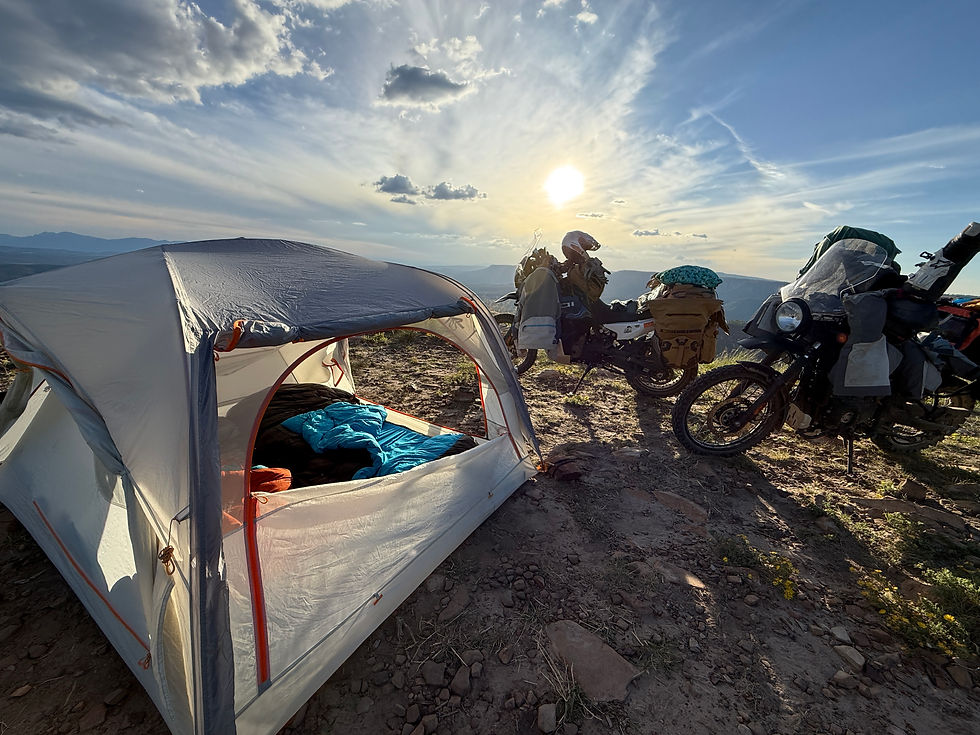
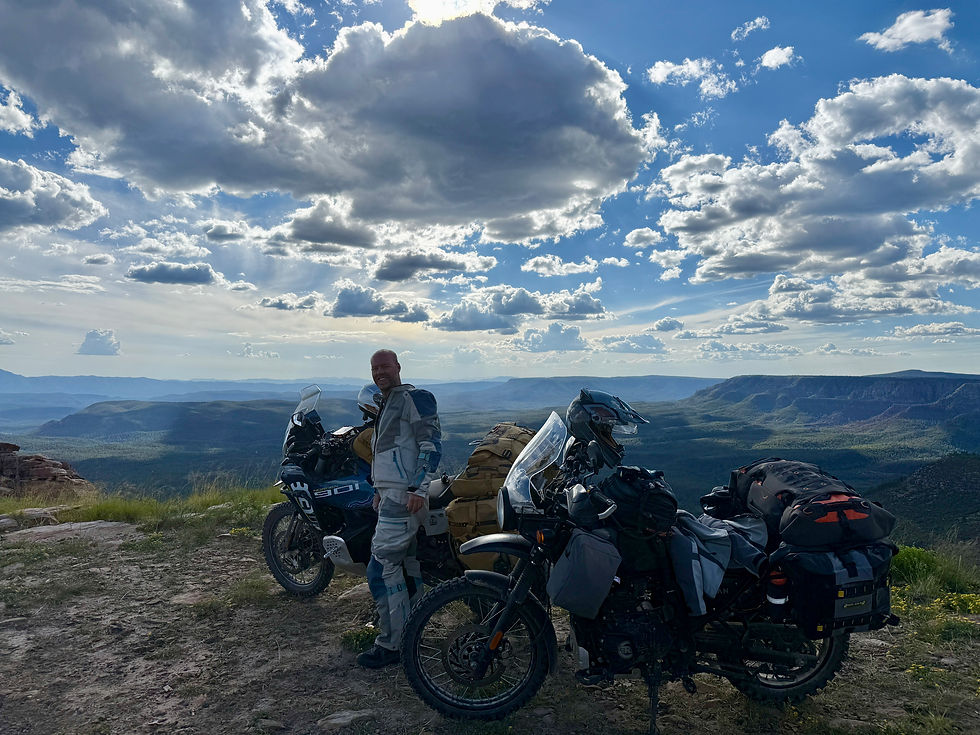
We continued north and wound our way along one of the most picturesque roads of the trip, via the Mogollon Rim. A smattering of rain instantly cooled us, and the temperature dropped as we climbed. The road switched to pavement, and we wound our way along the rim searching for a suitable campsite—they were abundant and all amazing. The one we settled on was epic—well off the main gravel road. We camped right on the edge of the cliff and were treated to epic views, a stunning sunset, and finally more reasonable temperatures. After all the heat and challenges of the trip so far, sitting there felt like a reward and the start of a new journey.

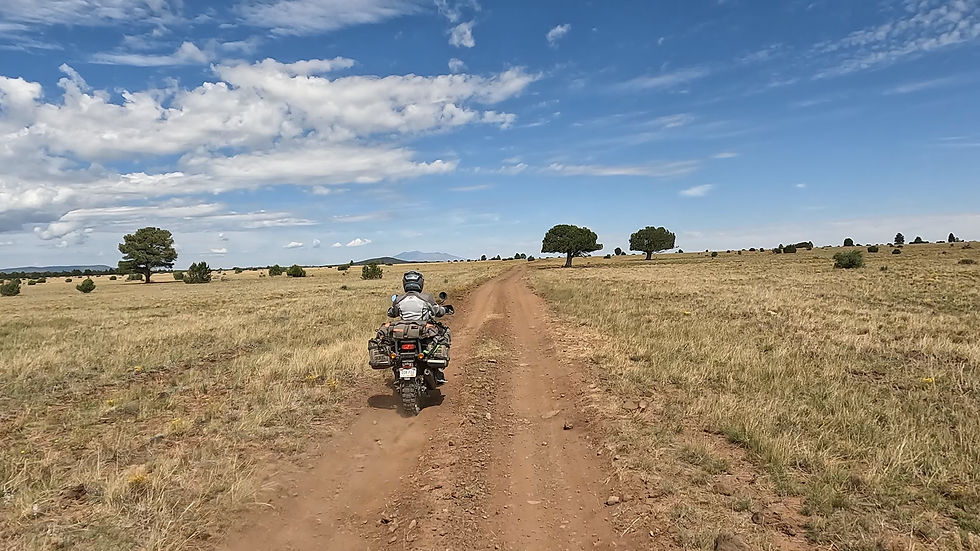
The next morning started on easy dirt roads winding through stunning pine forests. Once we turned onto a more remote track and made our way past a very slow traffic jam of cattle, we faced the most grueling trail on our journey yet. The road was packed dried mud, embedded with tire-shredding lava rock. There was no break for miles. Even if Chester had a decent suspension, it would have been impossible to simply rally through this kind of terrain. Even Gary was crawling through it to protect his tyres and questionable brakes. When we reached the end of the section, we decided to cut back to the pavement and make some progress north of Flagstaff—we aimed to reach the lip of the Grand Canyon, a replacement for our diverted trip to Copper Canyon. However, the moment I hit the tarmac and accelerated to highway speed, Chester revved, with little to no power transferring to the rear wheel. Despite a moment of denial, the heart-wrenching fact glared at me. My clutch was slipping.


It is here that we entered this tale. A Himalayan’s clutch cable demands constant maintenance—in fact, the manual suggests checking it every 500km—and it’s something we’d kept a careful eye on throughout the trip. I tried adjusting it, but the problem persisted. After 1700 miles of journeying through epic yet scalding terrain, we found ourselves kicking the ground, staring at Chester with a burnt-out clutch. The heat, high speeds, and heavy load of my camping gear had all played their part. When we’d added oil in Globe, it had been too late, the damage had been done.
We crawled the last 10 miles into Flagstaff, my hazard lights ablaze. The local dealer had no parts in stock and couldn't get them for several days. I could have limped home from there; it was only a bit over 550 miles; however, without being able to go above 45 mph, it would be slow and unforgiving, and there was no guarantee that Chester would even make it, leaving me stranded hundreds of miles from home.
With us needing to be back for Gary’s work, we changed our plans once again. I bit the bullet, rented a Penske truck, bought some straps at the local hardware store, and we loaded Chester into the back to the chuckles of the rental manager. I cursed the reader as I swiped my credit card.
We now cruised along paved roads, with Gary on his 901 following the Penske for pacing, since his cruise control had stopped working. It was always something. We stopped to camp outside Kayenta, Arizona, and then again outside Pagosa Springs, Colorado. The last day was an easy four-hour spin north to home. We rolled in dirty, bruised, and a little bit broken.

Being home offered space to reflect. Ending a trip this way, it would be easy to feel defeated and consider the trip a failure. After all, we didn’t make it to Copper Canyon, Chester ended up riding home in the back of a Penske, and Gary’s bike made it home, but was definitely worse for wear. It was certainly an adventure ride.
But it’s important to consider the other aspects of the trip. We traversed new terrain neither of us had ever explored, we camped in stunning spots, visited a part of Mexico we probably wouldn’t have ever gone to otherwise, and rode tracks that tested our skills.
We’ve been on numerous ADV trips before, both long and short, and frankly, in a lot of ways, this trip wasn’t any different. We created a semblance of a plan and quickly found ourselves adjusting expectations, modifying routes, and rolling with the sometimes painful punches. In my, albeit somewhat limited, experience, no ADV adventure has ever gone exactly as planned, and that’s part of the fun. It reminds you that riding, just like life, is dynamic and requires patience, flexibility, and the tenacity to keep going.
Comments